
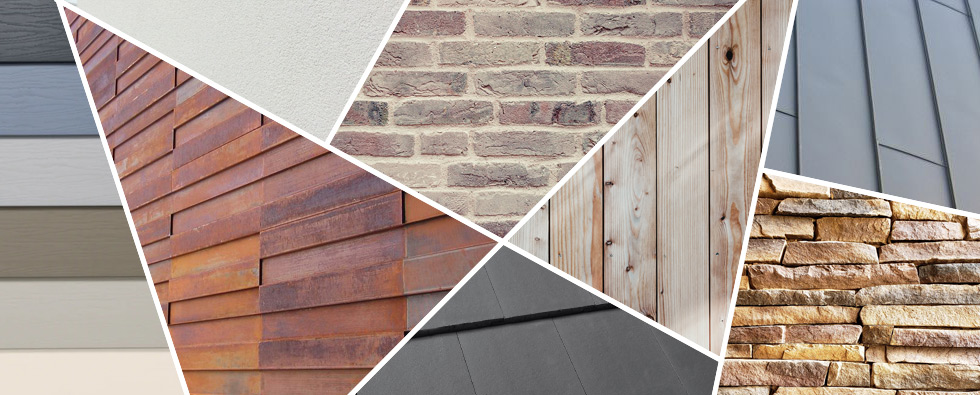
External Materials
A buildings appearance and performance are largely determined by the materials selected for the external elements ie, walls, roof, windows etc. Material choice influences how a building relates to what is around it and how it is experienced. Materials should be practical, durable, Affordable and Beautiful. Choosing the right materials can greatly help new development to fit harmoniously and be Connected with its surroundings.
Well-designed proposals for new development use materials carefully to reduce their environmental impact. This may be achieved in many different ways, for instance through materials that are locally sourced, high thermal or solar performance; or designs based on the typical dimensions of materials to reduce waste.
If different facing materials are being used on a single house or building, the change from one to another should appear logical. Typically, different materials might be used on different storeys or in order to articulate different parts of the structure – such as a front facade or architectural feature like a gable triangle, bay window or plinth. Elements such as lintels and plinths can also be enhanced by picking them out in a different material, or through the use of decorative detail like variations in bond and colour can be used to decorative effect. Used in this way, material changes and detailing can help to provide character and architectural interest to the building resulting in considered and Beautiful design.
Green roofs are flat or sloping roofs with some form of vegetation placed on them. They are intensively or extensively managed; the former with a deep soil profile supporting shrubs, trees and grass, and the latter with a shallow soil profile growing drought tolerant self seeding vegetation. Both are encouraged in appropriate locations, particularly adjacent to green/blue corridors and will be encouraged in locations adjacent (within 15m) of river corridors. They have numerous benefits that include prolonging the life of the roof, attenuating water, reducing sound transmission, improving thermal efficiency, enhancing air quality, and habitat creation. Care should be taken to ensure that they do not have an adverse visual effect, for example, disrupting a visually cohesive existing roofscape. Green walls can also be used in certain circumstances and provide many of the benefits of green roofs.
Design Principles
- Where alternative materials are used, these should either harmonise with the materials used on surrounding buildings or provide a striking contrast.
- Keep the number of materials on new development to a minimum.
- Detail buildings to ensure they have a good visual appearance that lasts over time and should emphasise the character of the material
- Protect and enhance biodiversity by incorporating habitat structures into the design of new buildings in order to increase biodiversity, for example, bat and swift boxes.
* Choice of materials is subjective to any local authority and planning department restrictions and site opportunities.