
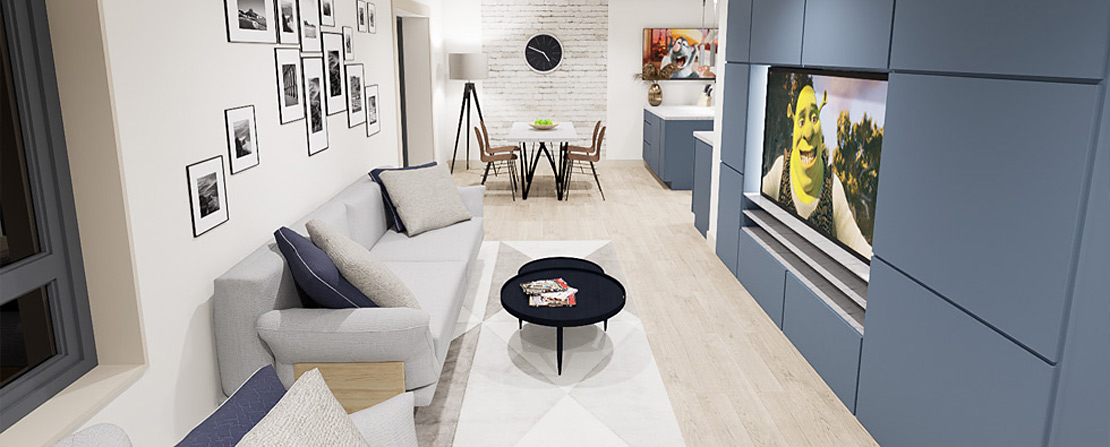
Living & Dining Room
In many cases, people with complex disabilities and health conditions face spending greater time within their living areas than others. It is important, therefore, that this space maximises light, size and manoeuvrability to create the feel of connection to the world outside while retaining the ability to live independently.
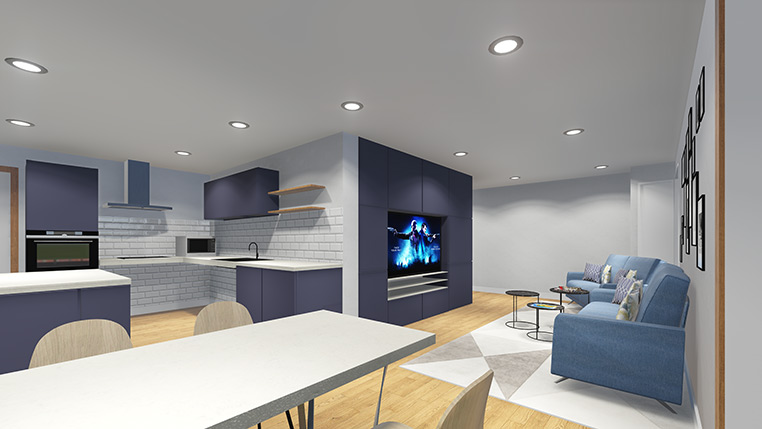
Assistive technology and being digitally Connected play a big part in this as does the contemporary layout of the property using open plan features to provide a living/dining area with ease of access to the kitchen. Ultimately the area allows for the engagement with the neighbourhood and community.
The absence of corridors maximises the usable Accessible space within the home and integrated storage solutions ensure that the living area remains a practical, comfortable and homely solution to independent living.
For further reading about the Living & Dining Room, please use the Design Principles / Design & Layout tabs on the top image.
Design Principles
- Creating a Beautiful, homely yet contemporary feel
- Larger than standard space sizes maximising accessibility and enhancing look and feel with Open plan layout combining the living and dining areas for maximum space efficiency and circulation
- Flexible and adaptable living to conform to a wide variety of disabilities with an abundance of space for manoeuvring and accessing all features and provide high levels of care as required.
- Dining room to be within easy reach of the kitchen
- Quick and clear electronic assistance with Blackwoods Clevercogs software via a tablet providing automated and wireless control of blinds, doors and lighting
- Beautiful and simple finishes & material choices
- Large windows / sliding doors / french doors providing a good amount of natural daylight & connection to the outdoors
- Space for large storage units / shelves
- Underfloor heating
- Optional Dining tables and furniture on castors for easy movement and flexibility
Design & Layout
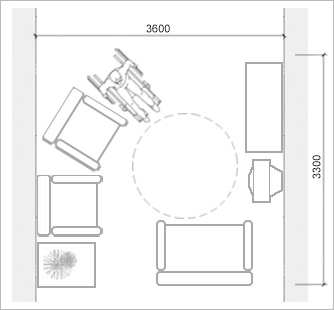
Typical Living Room Layout for Wheelchair Users
Housing for Varying Needs Guidance
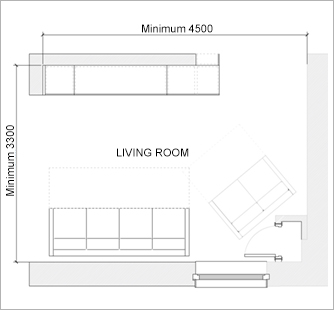
Living Room Layout for Blackwood Home
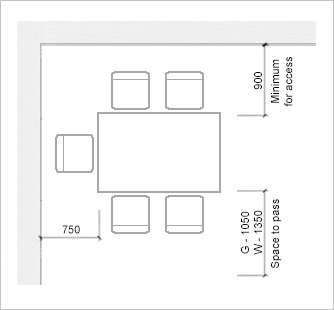
Typical Dining Room Layout for Wheelchair Users
Housing for Varying Needs Guidance
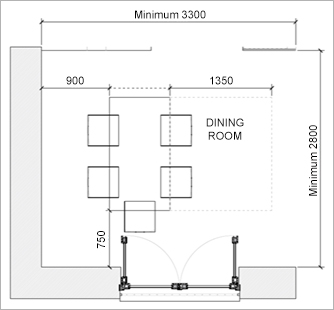
Dining Room Layout for Blackwood Home
- Generous living room size to achieve minimum 3300 x 4500mm (14.9m2) & dining room size of 2800 x 3300 (9.2m2)
- An 800mm “path” must be allowed for wheelchair users to manoeuvre & circulate between spaces with an associated 1500mm turning circle
- Number of soft seated positions in the living room to equal the number of bed spaces plus 2
- Storage with a minimum length of 2000mm and a height of 1500mm
- Space for an occasional table approx. 600x800mm
- Space for a desk or workspace with a chair in dwellings for three or more people
- Space within the living room for a wheelchair in addition to the furniture listed above
- Dining table size and seats in the dining room to equal the number of bed spaces plus occasional visitors
- Dining table activity space to achieve minimum 750mm at the head of the table, 900mm at any side adjacent to a wall and 1350mm at the side for wheelchair users to pass